
Hypermobility, EDS, and the Massage Therapy Career: What Every Therapist Should Know

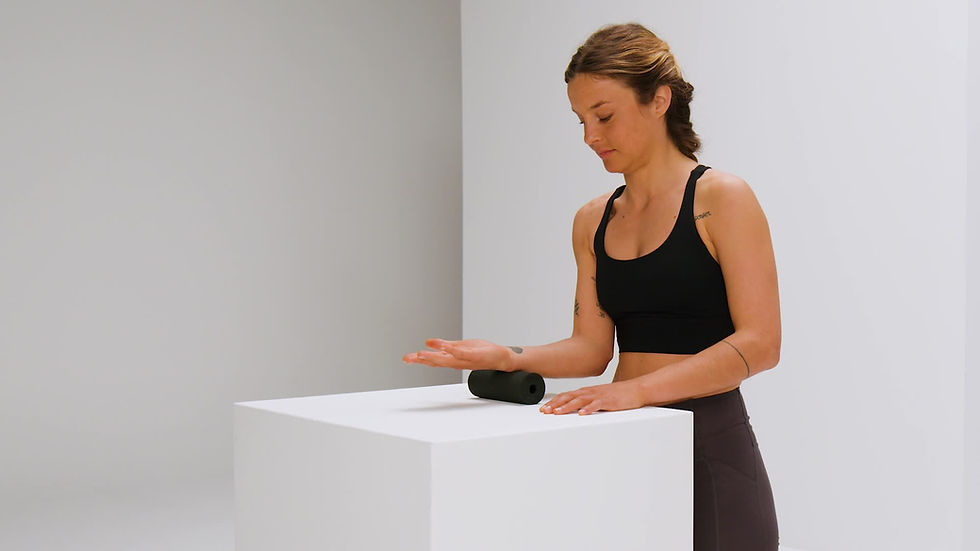
If you're naturally flexible or you've been told you're "double-jointed" you might see it as an advantage in a hands-on career like massage therapy. In some ways, it can be. But for therapists with true joint hyper mobility, or a connective tissue condition like Ehlers-Danlos Syndrome (EDS), that same flexibility can quietly work against a long, sustainable massage therapy career if it isn't understood and managed early.
What hypermobility actually is
Joint hyper mobility means a joint can move beyond what's typically considered a normal range of motion. For some people, that's simply a trait with no downside. For others, it comes with joint instability, chronic pain, frequent subluxations or dislocations, and a higher risk of injury. especially when hypermobility is part of a broader condition like Ehlers-Danlos Syndrome or a Hypermobility Spectrum Disorder (HSD). In EDS specifically, the connective tissue itself doesn't provide the structural support joints need, which is a different, deeper issue than simply having flexible joints from years of stretching or yoga (Niel Asher Education).
Why hypermobility matters for a massage therapy career specifically:
Massage therapy is physically demanding under the best of circumstances. Sustained pressure, repetitive hand and wrist motion, and hours spent on your feet all add up. For a therapist with hypermobility or EDS, those same demands land differently. Joints that already lack stability are being asked to bear repeated load and awkward angles, session after session, which raises the risk of strain, subluxation, and chronic pain well beyond what a typical therapist might experience doing the same work.
This isn't a hypothetical concern. In online communities for people living with EDS, therapists and prospective therapists frequently describe how physically taxing the work is on hypermobile joints, with many saying they've had to limit their hours or change how they practice entirely to keep doing the job long-term (Ehlers-Danlos Society Support Community). It's a real, common tension: the same hands that make someone a gifted, intuitive bodyworker can also be the most vulnerable part of their body.
More broadly, career-longevity research on massage therapists (regardless of hypermobility) backs this up, poor body mechanics and repetitive strain are consistently identified as the leading reasons therapists leave the field early, with average career length sometimes cited as just a few years without deliberate injury prevention (Good Hands Massage Therapy). For a hypermobile therapist, that risk curve starts even steeper.
What can actually be done about it
The good news: none of this means hypermobility rules someone out of a massage career. It means the career has to be built more intentionally from the start.
Learn body mechanics as a non-negotiable, not an afterthought. Proper stance, using body weight instead of muscular force, keeping wrists neutral, and generating pressure from the legs and core rather than the hands can dramatically reduce strain. This holds true for every therapist, but it matters even more when joints are inherently less stable (ClinicSense).
Use tools and equipment as leverage, not a crutch. Cupping, hot stones, scrapers and similar aids let a therapist treat deeper tissue layers without relying on repetitive gripping or sustained thumb pressure protecting the joints most likely to be affected by hypermobility.
Your thumbs don't have to do all the work. Learning when to switch from a thumb to a knuckle, fist, forearm, elbow, broad compression, or another technique (we include one day of barefoot massage in our curriculum) can be one of the most valuable career-longevity skills you develop. If one joint is repeatedly taking the majority of the load, changing the technique may be more valuable than finding a product that helps you tolerate the load.
Support joints proactively, not just after they hurt. Compression sleeves, kinesiology taping, and joint-specific braces are commonly used by people with hypermobility and EDS to improve proprioception (body awareness) and add stability during physically demanding activity which describes a massage therapist's workday well.
Build a strength and stability foundation outside of work hours. Bracing and taping help in the moment, but the more durable fix is pairing that support with targeted strength and neuromuscular training, ideally guided by a physical therapist familiar with hypermobility
Tools Can Be Part of Your Career-Longevity Toolbox
Taking care of your hands shouldn’t start when they hurt. For massage therapists with hypermobility, small strengthening and support tools may be useful additions to an overall plan for keeping the hands, fingers, wrists, and forearms strong and stable.
One example is a finger resistance band exerciser, which provides resistance as you open and extend the fingers. For someone with EDS or symptomatic hypermobility, though, more resistance is not automatically better. Exercises should emphasize controlled movement and stability rather than pushing a joint farther into its range, and an occupational therapist, physical therapist, or hand therapist can help determine which exercises and resistance levels are appropriate. The Ehlers-Danlos Society specifically emphasizes strengthening and movement control as important parts of managing hypermobility.
Another tool some therapists may find helpful is a finger or thumb splint. Splints can provide external support and help limit excessive movement in a hypermobile joint. However, this is one area where I wouldn't recommend simply buying a splint and wearing it while performing massage. The correct type of support depends on the joint and the individual. A poorly selected splint could interfere with normal mechanics or simply allow you to continue working through a problem that needs attention.
Think of these as tools, not solutions. A resistance band cannot replace good body mechanics. A thumb splint cannot make an unsustainable workload sustainable. The bigger picture still includes strength, stability, proper technique, appropriate workload, recovery, varied massage modalities, and listening to your body.
Why multiple modalities or multiple licenses can be a real career strategy
This is where I'd encourage any hypermobile student or therapist to think differently about career design. Doing the exact same techniques on the exact same joints, day after day, is one of the fastest paths to overuse injury. It's an even bigger risk for someone whose joints already carry less structural support.
Diversifying the kinds of work you do changes the story. Rotating between deeper, more physically demanding modalities and gentler ones think lymphatic drainage, craniosacral work, or aromatherapy massage, reiki alongside deep tissue — distributes physical load across different movement patterns instead of repeating the same strain over and over (MBLEx Guide).
Holding multiple licenses takes that same idea further. Many therapists build sustainable, long careers by pairing massage with esthetics, yoga instruction, or another complementary credential not just for the business benefits of a broader service menu, but because it changes what your body does with its time. A day split between massage tables, esthetics treatments, and teaching movement is a very different physical experience than eight straight hours of deep tissue work. It's part of why, at our school, so many of our own instructors and graduates end up cross trained rather than single modality. Variety isn't just good for business, it's good for the body doing the work.
A note on receiving massage, too
If you're a massage therapist who also happens to have hypermobility or EDS yourself, it's worth knowing this cuts both ways the same joint instability that affects how you practice also affects how massage should be practiced on you. Aggressive stretching or joint mobilization techniques carry real risk for hypermobile clients (including therapists receiving bodywork themselves), and a targeted, communicative approach matters more than deep pressure alone (Ehlers-Danlos News).
Recommended reading and resources
If you want to go deeper on any of this, these are worth a look:
Unraveling Joint Hypermobility: A Guide for Massage Therapists — Niel Asher Education
Is Massage Safe for EDS? — written by a massage therapist who herself has hEDS
Common Massage Therapist Injuries: Causes and Prevention — MBLEx Guide
Massage Therapist Career Longevity: Protect Your Body — ClinicSense
Adaptive Equipment for Hypermobility — Set Physical Therapy
This post is educational, not medical advice. If you have hyper mobility, EDS, or another connective tissue condition and you're considering a massage career, talk with your physician or physical therapist about what's realistic for your body and don't hesitate to bring it up with us here at the school. We'd rather help you build a career that lasts than watch you push through pain that shortens it.


Comments